On this page
- Why robotics finally became investable
- The robotics segments at a glance
- Industrial robotics: the proven, profitable core
- Warehouse and logistics: automation with obvious payback
- Surgical and medical robotics: the highest-quality corner
- Enabling components: the picks and shovels of robotics stocks
- Humanoid robots: the biggest prize and the biggest gamble
- How I actually evaluate a robotics stock
- Frequently asked questions
- The Bottom Line
I’ll admit something: for years I treated robotics as a “someday” theme. Cool demos, lots of magazine covers, very little that belonged in my portfolio. What changed my mind wasn’t a flashy humanoid video — it was watching AI turn dumb, pre-programmed machines into something that can see, adapt, and learn. So here’s my short answer. Robotics stocks are shares in companies that design, build, or supply the technology behind automated machines — factory arms, warehouse systems, surgical robots, emerging humanoids. The best sell into durable demand from labor shortages, reshoring, and AI, but the sector is lumpy and easy to overpay for.
That’s the part most people skip. A surgical-robot maker, an industrial-automation giant, and a pre-revenue humanoid startup behave like completely different animals — so I’ll break the sector down by segment and tell you honestly where I’d put real money versus a small ticket I can afford to lose.
Why robotics finally became investable
Robotics has had false dawns before, and I lived through a couple. What feels different this time isn’t hype — it’s a stack of forces all pushing the same direction at once.
The biggest one is AI. Older robots were precise puppets — they repeated a fixed motion flawlessly but couldn’t handle a part that arrived at the wrong angle. Modern machine vision and learning let a robot recognize objects, adapt to a messy environment, and be trained by demonstration instead of hand-coded for every move. Every step forward in AI widens the range of jobs a robot can do profitably, quietly expanding the market these companies sell into. To understand the compute layer underneath all this, my piece on AI infrastructure stocks is the natural companion read — the brains driving robotics live there.
The second force is labor. Manufacturing, warehousing, healthcare, and agriculture are all short of workers, and the shortage isn’t cyclical noise — demographics are working against a lot of developed economies. When the cost of not automating climbs past the cost of a machine, adoption stops being optional. Third, the hardware got cheaper while getting better: sensors, actuators, processors, and batteries have come down in price as performance climbed, putting a collaborative robot within reach of mid-sized businesses. Cheaper, smarter, and finally in demand — that combination moved robotics from my “watch list” to my “own a piece of it” list.
The robotics segments at a glance
Before any tickers, here’s the map I keep in my head — the major segments, what drives each, and the risk that tends to bite. Treat it as a starting frame, not gospel; the lines blur.
| Segment | What drives it | Why it matters for investors | Main risk to watch |
|---|---|---|---|
| Industrial robotics | Factory automation, reshoring, labor costs | Largest revenue base; the proven, profitable core | Long, lumpy capital-spending cycles |
| Warehouse & logistics | E-commerce volume, fulfillment speed, picker shortages | Fast-growing, with clear return-on-investment for buyers | Customer concentration; heavy upfront cost |
| Surgical & medical | Aging populations, demand for minimally invasive procedures | High margins and razor-and-blade recurring revenue | Regulatory hurdles; premium valuations |
| Enabling components | Demand for sensors, vision, motors, controllers | “Picks and shovels” — sells to every robot maker | Cyclicality tied to the broader hardware cycle |
| Humanoid robots | General-purpose labor, AI advances | Largest potential market; earliest, most speculative | Unproven economics; payoff likely years out |
| Software & AI brains | Vision, navigation, learning models | The intelligence that makes modern robots useful | Often bundled inside bigger tech names |
Notice the right-hand column. The risk profile shifts dramatically as you move down — industrial robotics is a real, cash-generating business today, while humanoids are a venture bet wearing a public ticker. I weight my exposure accordingly. Now let’s take the segments one at a time.
Industrial robotics: the proven, profitable core
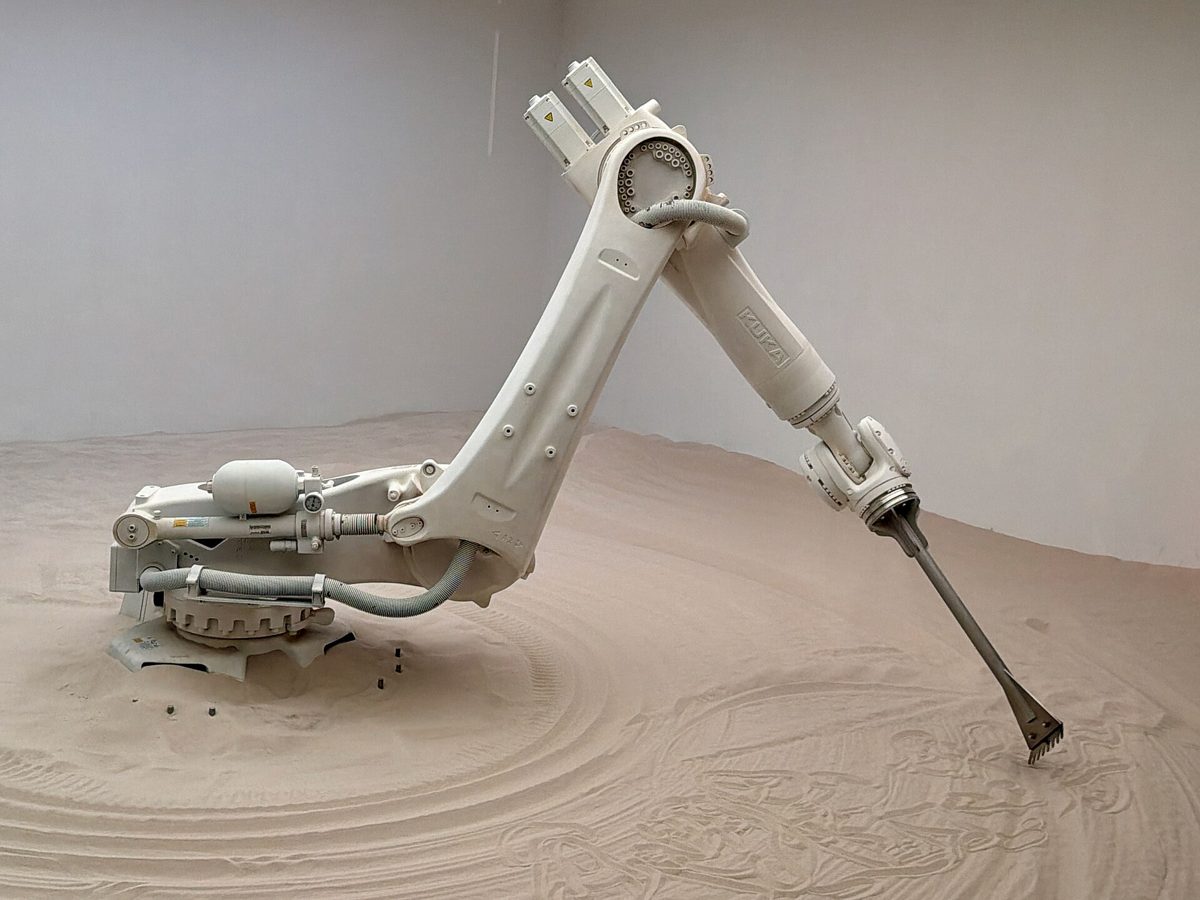
If you only own one slice of this theme, I’d argue it should be here. Industrial robots — the arms that weld, paint, assemble, and move material on factory floors — are the largest segment by revenue and the one with a decades-long track record of actually making money. This is not a science project; it’s a global business with entrenched leaders.
The names worth knowing are mostly old hands at automation. ABB (ABB), Japan’s Fanuc and Yaskawa, and Switzerland-listed peers have built deep installed bases, and in the U.S. Rockwell Automation (ROK) is the pure-play most American investors reach for. These companies benefit from reshoring — the push to bring manufacturing back closer to home — and from the simple fact that a robot doesn’t call in sick. This is the steadiest way to own the theme, but respect the cadence: factories don’t re-tool every quarter, so orders move in long, lumpy capital-spending cycles. Revenue can sag for a year when industrial demand softens, then surge when it returns. Buy these for the decade, not the next earnings print, and check current data before investing because the cycle’s position matters as much as the company.
Warehouse and logistics: automation with obvious payback
This is the segment where the customer’s math is easiest to see, which is why it’s growing fast. E-commerce keeps raising the bar on delivery speed, warehouses can’t find enough pickers, and the payback on a fleet of autonomous machines is measurable in months, not theory. When the business case is that clean, adoption follows.
Symbotic (SYM) comes up most in conversation here — it builds AI-powered warehouse automation systems and has a major retail backer anchoring its order book. That backing is both the bull and bear case: concentrated demand from one giant customer can fuel growth and then whiplash the stock if the relationship shifts, so read the customer-concentration disclosures carefully and confirm current figures before investing. You’ll also find logistics automation inside broader names — Zebra Technologies (ZBRA) in scanning and tracking, and the material-handling arms of larger industrials. A lot of the real-time decision-making here happens at the network edge rather than a distant data center, which is why I keep one eye on edge computing stocks when I think about who powers the warehouse of the future.
Surgical and medical robotics: the highest-quality corner
If industrial robotics is the steadiest segment, surgical robotics might be the highest-quality one — and it’s the part of this sector I’ve held longest. The driver is demographic and durable: aging populations, more procedures, and a preference for minimally invasive surgery that gets patients home faster. That demand doesn’t evaporate in a recession.
Intuitive Surgical (ISRG) essentially defined the category with its da Vinci platform, and the economics are what I love. The hospital buys an expensive system up front, then keeps buying the instruments needed for every procedure — a razor-and-blade structure that throws off high-margin, recurring revenue, with switching costs that grow as surgeons train on the platform. That’s a genuine moat. The flip side: the market knows all this, so the stock rarely looks cheap, and any new entrant or reimbursement change is worth watching. Medtronic (MDT), Stryker (SYK), and Johnson & Johnson are all pushing in too. As always, confirm current valuation data before investing — quality and a fair entry price are two different decisions.
Enabling components: the picks and shovels of robotics stocks
Here’s the angle a lot of investors miss. You don’t have to bet on which robot maker wins — you can own the companies that supply all of them. Every machine needs sensors, vision, precise motors, and controllers. Sell those, and you ride the theme no matter whose brand is on the robot.
Teradyne (TER) is an interesting one — known for semiconductor test equipment, it also owns collaborative-robot businesses, giving it a foot in both worlds. Keyence dominates high-end industrial sensors and vision. And the AI accelerators that increasingly serve as a robot’s perception engine point straight back to Nvidia (NVDA), whose robotics and simulation platforms are quietly becoming standard infrastructure. The trade-off: this layer is still tied to the broader hardware cycle, so when factory and chip spending cools, these names feel it. But picks-and-shovels spreads my bet across the whole field instead of forcing me to pick one champion.
Humanoid robots: the biggest prize and the biggest gamble
Now the part everyone actually wants to talk about. Humanoid robots — general-purpose machines meant to do physical work in spaces built for people — have the largest potential market on this whole page, because “general-purpose labor” is an enormous category. If it works, it’s transformative. That’s a real if.
Tesla (TSLA) gets the most attention with its Optimus project, and a wave of well-funded private startups is chasing the same goal. The bull case is intoxicating: a machine you can retask like a worker, dropping into warehouses, factories, even homes. But keep both feet on the ground. The economics are unproven, the timelines keep slipping, and a public “humanoid stock” today is essentially a venture-stage bet that happens to trade on an exchange. It’s fine to own a small position for the optionality — emphasis on small. Size it like a lottery ticket you can afford to tear up, never as a foundation. The same discipline I apply to quantum computing stocks applies here: the technology is real, the payoff is distant, and position sizing keeps a fascinating idea from wrecking your portfolio.
How I actually evaluate a robotics stock
Knowing the segments is half the battle; judging an individual company is the other half. Robotics makes that tricky, because the exciting names often have thin or no profits while the profitable ones move in slow cycles. Here’s the checklist I run.
First, is the revenue real and recurring, or just a story about a future market? A surgical-robot maker selling instruments daily is a different proposition than a humanoid startup selling a vision. Second, where is the company in its capital-spending cycle — near a trough or a peak? Third, the moat: switching costs, an installed base, proprietary software, a components niche nobody else fills. And fourth, the one investors skip most — valuation. A wonderful robotics business bought at an absurd price is still a poor investment.
That last point deserves a flag. Because so much of this sector is priced on future growth, these stocks tend to be more sensitive to interest rates and sentiment than the broad market, and they swing hard. I lean on a real valuation framework before buying anything here, and I’d point you to my guides on the best growth stocks to buy in 2026 and the wider best technology growth stocks for how I weigh price against quality. Robotics is one thread in that larger fabric.
My own approach is a barbell: proven cash generators as core positions, tiny speculative humanoid tickets on the other end, warehouse automation and components in the middle. The mistake I see constantly is treating the whole sector as one risk bucket. If your “robotics exposure” is really three pre-revenue moonshots, you don’t own a theme — you own a gamble.
Frequently asked questions
What are robotics stocks?
Robotics stocks are shares in companies that design, manufacture, or supply the technology behind automated machines. That spans industrial-arm makers, warehouse-automation builders, surgical-robot companies, the sensor and component suppliers that feed all of them, and early-stage humanoid developers. Some are mature, profitable businesses; others are speculative bets on markets that haven’t fully arrived yet, so the label covers very different risk profiles.
Are robotics stocks a good investment in 2026?
They can be, but “robotics” isn’t one investment. The proven industrial and surgical names offer durable demand and, in some cases, recurring revenue, while humanoids remain speculative. The theme has real tailwinds from AI, labor shortages, and reshoring. As with any growth area, the entry price matters as much as the company — check current data before investing rather than chasing a hot story.
What is the most profitable robotics segment?
Surgical and medical robotics tends to be the highest-margin corner, thanks to a razor-and-blade model where hospitals buy systems and then keep purchasing instruments for every procedure. Industrial robotics generates the largest absolute revenue but moves in cycles. The enabling-components layer — sensors, vision, motors — earns steady money by selling to the entire field instead of betting on one winner.
Should I buy individual robotics stocks or a robotics ETF?
Both have a place. An ETF gives you instant diversification across the maturity spectrum and asks little of you after you buy, which suits the lumpiness of this sector. Individual stocks let you target the segment you have conviction in — say, surgical over humanoids — in exchange for real research and higher single-name risk. I personally blend a diversified base with a few researched names.
Are humanoid robot stocks worth the risk?
Only as a small, speculative slice. Humanoids have the largest potential market in robotics, but the economics are unproven and timelines keep slipping, so today’s public names trade more like venture bets than established businesses. If the idea excites you, own a tiny position for the optionality and accept you might lose it. Never make a frontier theme the foundation of a portfolio.
The Bottom Line
Robotics finally earned a place in my portfolio, but “robotics” is at least half a dozen different businesses hiding under one word. Anchor your exposure in the proven cash generators — industrial automation and a high-quality surgical name — add the components suppliers that win no matter whose robot ships, do your homework in warehouse automation, and treat humanoids as the tiny lottery ticket they currently are. Respect the cyclicality, refuse to overpay for even a great company, and the AI-and-labor tailwinds under this sector can compound quietly on your behalf for a long time.
The highest-value robotics market right now is arguably the operating room, where surgical systems command pricing and recurring revenue that industrial robots can only envy — see the best medical device stocks for that side of automation.
Last updated: June 2026. Figures are approximate and change — confirm current data before investing. Educational only, not individual investment advice.