
On this page
- What compound growth actually means
- Compound growth illustrated: $10,000 at different rates
- The Rule of 72: a back-of-the-napkin compounding tool
- Why growth stocks compound on two levels at once
- The reinvestment rate is the hidden lever
- Time is the real ingredient
- What can break the compounding curve
- The Einstein line, hedged honestly
- Frequently asked questions
- The Bottom Line
I didn’t really believe in compounding until I went back and looked at an old brokerage statement. A position I’d nearly sold out of boredom years earlier had quietly turned into the largest holding I owned. I hadn’t added a dime to it. It just kept doubling on top of itself while I wasn’t paying attention. That statement taught me more than any textbook ever did.
So here’s the short version. Compound growth is what happens when your gains start earning gains of their own, so each year’s return is calculated on a bigger base than the year before. Instead of a straight line, your money curves upward, slowly at first and then startlingly fast. Growth stocks are the purest way I know to put that curve to work.
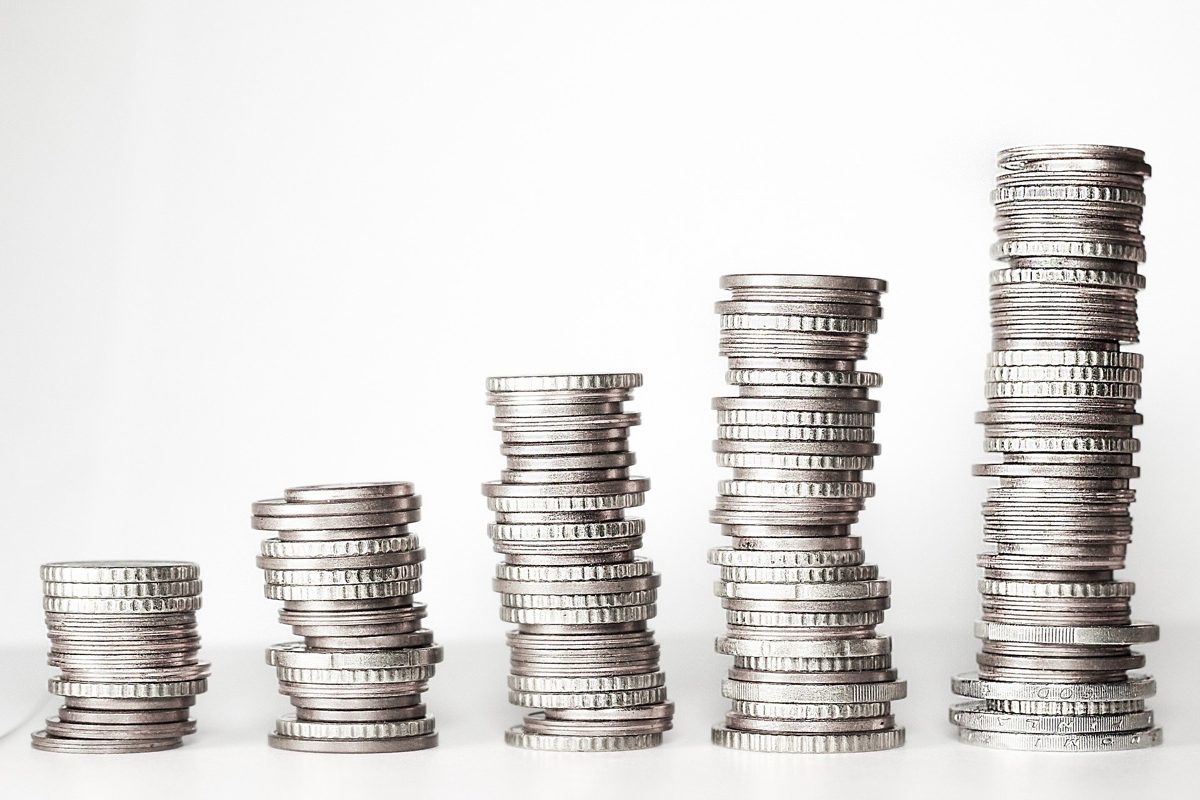
I want to show you the actual mechanics, not just wave my hands at the idea. We’ll walk through the math with round illustrative numbers, look at why growth companies compound on two levels at once, and talk honestly about what can break the curve. If you want the wider map first, my Growth Stock Investing Complete Guide lays out the full landscape.
What compound growth actually means
Compound growth occurs when your returns generate their own returns. That’s the whole idea in one sentence, but the implications are huge. Simple growth calculates gains only on your original stake. Compound growth adds each period’s gain back to the base, then calculates the next period’s gain on that larger amount. Do that for thirty years and the difference isn’t small — it’s the gap between comfortable and life-changing.
Picture two buckets. In the first, you earn a flat dollar amount every year on your original money. In the second, every dollar you earn gets tossed back in and starts earning too. For the first few years the buckets look almost identical, which is exactly why so many people give up early. The second bucket then pulls ahead slowly, then violently, because the base it’s growing from keeps getting bigger.
That “violently at the end” part is the piece I underestimated for years. Honestly, most of the wealth in a long compounding run shows up in the final stretch, not the beginning. If you bail during the boring middle, you hand the best years to whoever buys your shares.
Compound growth illustrated: $10,000 at different rates
Numbers make this concrete in a way words can’t. The table below shows roughly what a single $10,000 investment becomes at various annual return rates over different time horizons. I want to be clear up front: these are arithmetic illustrations of compounding, not predictions or promised returns. No real investment delivers a smooth, identical gain every year — markets zigzag. Treat this as a way to feel the shape of the curve, nothing more.
| Annual return (illustration) | After 10 years | After 20 years | After 30 years |
|---|---|---|---|
| 6% (roughly long-term bonds) | ~$17,900 | ~$32,100 | ~$57,400 |
| 10% (roughly the long-run stock average) | ~$25,900 | ~$67,300 | ~$174,500 |
| 15% (a strong growth-stock portfolio) | ~$40,500 | ~$163,700 | ~$662,100 |
| 20% (what the best growth investors aim for) | ~$61,900 | ~$383,400 | ~$2,373,800 |
Look hard at the bottom-right corner. Same starting amount, same thirty years — but the spread between a 10% return and a 20% return is the difference between roughly $175,000 and well over $2 million. That’s not a typo, and it’s not magic. It’s just compounding rewarding the higher rate across many doublings. A five- or ten-point edge in annual return, sustained, completely reshapes the outcome — which is the whole argument for caring about where your money grows fastest.
The Rule of 72: a back-of-the-napkin compounding tool
You don’t need a spreadsheet to estimate this stuff. The Rule of 72 is a shortcut I use constantly: divide 72 by your annual return rate, and you get the rough number of years it takes to double your money. It’s arithmetic, not a forecast, but it’s close enough to be genuinely useful.
- At 6% a year, your money doubles in about 12 years.
- At 10% a year, it doubles in roughly 7.2 years.
- At 15% a year, it doubles in about 4.8 years.
- At 20% a year, it doubles in roughly 3.6 years.
Now string the doublings together, because that’s where it gets interesting. A sum growing at roughly 15% a year doubles in about five years, which means it runs through close to six doublings over thirty years. Six doublings turns $10,000 into something north of $600,000 — which lines up with the table above. The Rule of 72 won’t give you a precise figure, but it instantly tells you whether a given return rate is even in the right ballpark for your goals. I reach for it whenever someone quotes me a “guaranteed” return and I want a quick gut check.
Why growth stocks compound on two levels at once
Not every investment compounds equally well, and this is where growth stocks earn their reputation. They actually compound on two levels simultaneously, and once you see it, you can’t unsee it.
Level one: the business compounds
A growth company takes its earnings and reinvests them straight back into itself — new products, new markets, more engineers, more capacity. Each dollar reinvested at a high return on capital generates new revenue, which produces new earnings, which get reinvested again. A business earning, say, a 25% return on equity that plows nearly all of its profit back in is compounding its own earning power year after year. That internal flywheel is the raw engine.
Level two: the stock price compounds
As that business grows larger and more profitable, its value rises, and the share price tends to follow over time. Each year’s price gain stacks on top of all the previous years’ gains. So you’ve got business compounding driving stock-price compounding — two curves feeding each other. That dual effect is exactly why growth stocks have historically been one of the most effective wealth-building categories available to ordinary investors. It’s also why I’d rather own a company that retains and redeploys its profits than one that simply mails me a check.
That last point is worth pausing on, because it’s the core distinction between two whole styles of investing. I broke it down in detail in Growth Stocks vs Income Stocks, but the short version is this: income stocks hand you cash today, while growth stocks reinvest on your behalf and let the compounding run inside the business. Both are valid. They just compound very differently.
The reinvestment rate is the hidden lever
Here’s a nuance that trips people up. A high return on capital only matters if the company can actually reinvest a large share of its profit at that high rate. A business earning 25% on equity but paying out most of its earnings as dividends is leaving compounding on the table. The magic combination is a high return on capital and a high reinvestment rate together.
This is precisely why classic growth companies don’t pay dividends. They’ve decided — correctly, when they’re good at it — that every dollar is worth more reinvested than handed back to shareholders. Amazon ran on razor-thin reported profit for the better part of two decades while pouring everything into building the machine that prints cash today. That wasn’t a failure to compound; it was compounding so aggressively the profit barely surfaced. The question I ask about any growth name isn’t “how big is the dividend?” — it’s “how much can they reinvest, and how well?”
Judging that “how well” is the hard part, and it’s mostly a valuation question once a company is already growing fast. Paying any price for compounding doesn’t work; you can overpay for a wonderful business and wait years just to break even. If you want to get sharper on that, my Growth Stock Valuation Basics walks through how I think about what a compounding business is actually worth.
Time is the real ingredient
If I could tattoo one lesson onto every new investor, it’d be this: compounding needs time far more than it needs cleverness. The curve only bends sharply upward after the base has had years to grow. Start early and let an ordinary return run for decades, and you’ll often beat someone who started late chasing spectacular returns. The math just favors the early starter — those extra doublings at the end are worth more than anything you can do at the beginning.
That’s why the single most expensive mistake I see is waiting. People tell themselves they’ll start once they have more money, more knowledge, more certainty. Meanwhile the clock — the one ingredient you can never buy back — keeps running. I dug into the timing question specifically in When to Start Investing in Growth Stocks, and the honest answer is almost always “sooner than you think, with whatever you can spare.”
The flip side of time is that you have to actually stay invested to collect it. Selling during a scary drawdown resets the clock and locks you out of the steep part of the curve. The hardest skill in this whole game isn’t picking winners — it’s sitting still while a good business does its slow, then sudden, work.
What can break the compounding curve
I’d be selling you a fantasy if I pretended this was free money, so let me name the things that genuinely interrupt compounding. Naming them is half the defense.
- Overpaying at the start. A high entry valuation can stall your returns for years even if the business does fine. The compounding still happens inside the company; it just doesn’t reach you until the price catches up.
- Growth slowing down. No company grows 25% forever. When the rate decelerates, the premium the market pays usually shrinks too, and the stock can fall even as earnings rise.
- Bad capital allocation. The whole thesis rests on management reinvesting well. Pour profit into bad acquisitions or dead-end projects and the internal flywheel quietly stops turning.
- Selling too soon. The most common self-inflicted wound. Panic-selling in a 40%-plus drawdown — which is common, not rare, for great long-term holdings — hands the best years to someone else. Check current data, but expect turbulence.
- Inflation and taxes. Both nibble at your real, after-tax compounding. Tax-advantaged accounts and a long horizon are the main tools for keeping more of the curve.
None of this should scare you out of compounding. It should make you patient, valuation-aware, and selective about which businesses you trust to do the reinvesting. When I’m choosing names to hold for the long haul, I lean on the work in Best Growth Stocks to Buy in 2026, where I update the companies I think can keep compounding.
The Einstein line, hedged honestly
You’ve probably heard that Albert Einstein reportedly called compound interest the eighth wonder of the world. The quote is almost certainly apocryphal — there’s no solid record he ever said it. But I repeat it anyway, because the sentiment is dead-on. Compounding rewards the patient and quietly penalizes everyone fighting it through debt or short-term churning. Wrong attribution, right idea.
Frequently asked questions
What’s the difference between compound growth and simple growth?
Simple growth pays you the same amount each period because it’s always calculated on your original stake. Compound growth adds each period’s gain back to the base, so the next gain is calculated on a larger amount. Over short stretches the two look similar, but over decades compounding pulls dramatically ahead because the base keeps expanding.
How fast can compound growth double my money?
Use the Rule of 72: divide 72 by your annual return rate for a rough doubling time. At roughly 10% a year your money doubles in about 7.2 years; at 15% it’s closer to 4.8 years. These are arithmetic illustrations, not promised returns — real markets move unevenly, so always check current data for any actual investment.
Why do growth stocks compound better than dividend stocks?
Growth companies reinvest most of their earnings back into the business at a high return on capital, so compounding runs inside the company instead of being paid out. Dividend stocks hand you cash you then have to reinvest yourself, often at lower rates. When a business reinvests well, keeping the profit inside compounds faster than distributing it.
Do I need a lot of money to benefit from compound growth?
No. Compounding cares far more about rate and time than starting size. A modest amount left to grow for decades, ideally with regular contributions, can outpace a much larger sum that starts late. The single biggest lever for most people isn’t the amount — it’s beginning early and staying invested through the boring, flat-looking middle years.
What can stop compound growth from working?
Mostly four things: overpaying at the start, a company’s growth slowing, poor reinvestment by management, and you selling during a downturn. Inflation and taxes also erode your real, after-tax results. The compounding math itself never fails — it’s usually behavior, valuation, or business deterioration that interrupts the curve before it reaches the steep part.
The Bottom Line
Strip away the mystique and compound growth is just gains earning gains, year after year, on an ever-larger base. The curve starts slow enough to test your patience and ends fast enough to change your life — and growth stocks supercharge it by compounding twice over, once inside the business and again in the share price. Your job is simpler than it sounds: don’t overpay, pick businesses that reinvest well, start as early as you can, and stay in your seat. Time does the heavy lifting. The investors who win at this aren’t usually the smartest in the room — they’re the ones who let the curve finish.
Last updated: June 2026. Figures are approximate and change — confirm current data before investing. Educational only, not individual investment advice.