On this page
The first time I bought a solar stock, I lost money on it. Not a little — a lot. I’d confused a real long-term trend with a good entry price. That lesson shaped how I think about this whole category.
Sustainable investing means selecting stocks and funds using environmental, social, and governance criteria alongside traditional financial analysis. Approaches range from excluding tobacco and fossil fuels, to scoring companies on ESG metrics, to buying pure-play themes like clean energy. It is a screening method, not a guaranteed return premium.

What follows is my honest read after years of owning some of these names, arguing about them, and watching the political weather change around them. I’m not here to sell you on saving the planet with your brokerage account. I’m here to tell you what actually works, what’s marketing, and where the growth genuinely lives.
The four main approaches, compared
People throw “ESG,” “sustainable,” “impact,” and “socially responsible” around as if they’re synonyms. They aren’t. The differences matter because they produce very different portfolios and very different risk.
| Approach | What it actually does | Growth potential | Main weakness |
|---|---|---|---|
| Negative screening | Excludes sectors — tobacco, weapons, thermal coal, sometimes oil and gas | Low. It removes holdings, it doesn’t add growth | Blunt. Can drop a whole sector during that sector’s best year |
| ESG integration | Scores companies on carbon, labor, board quality, then blends that into normal analysis | Moderate. Tends to tilt toward large-cap quality | Ratings disagree wildly between providers |
| Thematic | Concentrated bets on solar, wind, water, EVs, grid hardware, efficiency | High, and high volatility to match | Rate-sensitive, policy-dependent, prone to bubbles |
| Impact investing | Targets measurable outcomes — emissions avoided, people served | Varies. Often private or fixed income | Measurement is inconsistent; liquidity can be poor |
If you’re a growth investor, the thematic column is where you’ll spend most of your time. It’s also the column where I’ve seen the most money destroyed by good intentions and bad timing.
Let’s talk about greenwashing first
I want to deal with the ugly part before the fun part, because most articles do it in reverse.
Greenwashing is real and it is everywhere. A fund adds “ESG” or “sustainable” to its name, keeps roughly the same mega-cap technology holdings it always had, and charges a slightly higher expense ratio for the privilege. Look inside a lot of broad ESG index funds — the iShares ESG Aware MSCI USA ETF (ESGU) and Vanguard ESG US Stock ETF (ESGV) are the ones people cite most — and you’ll find Microsoft, Nvidia, Apple, and Amazon near the top, same as a plain S&P 500 fund. Verify current holdings yourself before you assume otherwise.
That’s not fraud. Software companies genuinely have small direct carbon footprints. But it means a lot of “sustainable” portfolios are, functionally, large-cap growth funds wearing a costume. If you bought one expecting exposure to the energy transition, you didn’t get it.
Regulators noticed. Both U.S. and European rules have tightened around what a fund can call itself, and several funds quietly rebranded or dropped ESG language rather than comply. Watch for that pattern — a name change without a holdings change tells you the label was always cosmetic.
The ratings problem nobody solved
Here’s the part that genuinely undermines the whole field: ESG ratings don’t agree with each other.
MSCI, Sustainalytics, and S&P Global can look at the same company and reach meaningfully different conclusions. Credit ratings from Moody’s and S&P correlate tightly because they measure one thing — default risk. ESG ratings correlate far more loosely because the providers are measuring different things, weighting them differently, and using patchy self-reported disclosure as input.
Tesla is the classic example. Depending on whose methodology you use, it’s either a climate hero for accelerating EV adoption or a governance and labor-practices problem. Both readings are defensible. That’s the issue — if two rigorous analysts can land on opposite answers, the score isn’t measuring something objective.
My practical response: I don’t outsource judgment to a rating. I use ESG data as a red-flag scanner for governance and litigation risk, and I do my own work on the business.
The political backlash, and why it matters to your returns
Somewhere around 2022, ESG stopped being a boring institutional acronym and became a culture-war term in the United States.
Several states passed laws restricting public pension funds from using ESG criteria or from doing business with asset managers deemed hostile to fossil fuels. Texas and Florida were the most aggressive. Large asset managers softened their public language, and some stepped back from climate coalitions they’d previously joined with fanfare. Meanwhile, Europe went the opposite direction with mandatory sustainability disclosure.
You might find this exhausting. I do. But it has two concrete consequences for a portfolio.
First, U.S. policy support for clean energy is now genuinely uncertain across election cycles. Tax credits, loan guarantees, and permitting rules can change. Any company whose model depends on a specific subsidy carries political risk that has nothing to do with how well it executes.
Second, the backlash created dislocations. When capital is forced out of a sector for non-economic reasons, prices can fall below what fundamentals justify. I’ve made money buying into exactly that kind of pressure. It requires patience and a stomach for drawdowns.
Does sustainable investing actually help or hurt returns?
The honest answer is that it depends almost entirely on what your screen does to your sector weights, and over what window you measure.
Broad ESG-integrated funds have often tracked close to their conventional benchmarks, because they hold mostly the same companies. In years when energy leads the market, exclusion-based funds lag — that’s arithmetic, not ideology. In years when technology and quality lead, they can look great. Neither outcome proves ESG creates or destroys alpha.
Thematic clean energy funds are a different animal. They’ve had spectacular runs and brutal multi-year drawdowns, driven mostly by interest rates and policy headlines rather than by anything about sustainability. Renewable projects are capital-intensive and financed with debt. When rates rise, project economics compress and these stocks get hit hard.
What I do believe, with reasonable confidence: strong governance is a legitimate risk factor. Companies with self-dealing boards, opaque accounting, and terrible employee retention blow up more often. That’s the “G” in ESG, and it’s the piece I’d defend on purely financial grounds. The “E” and “S” are more situational.
Where the real growth actually sits
If you want energy-transition exposure with actual revenue growth attached, I’d point you toward the picks-and-shovels layer rather than the headline names.
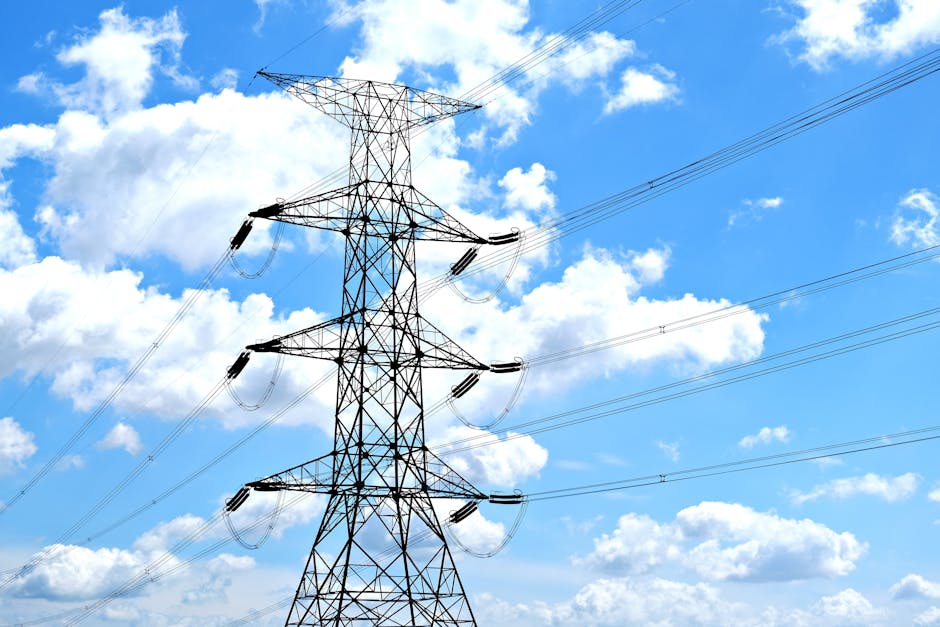
Electricity demand is rising for the first time in a generation, driven by data centers, electrification of heating and transport, and reshored manufacturing. That’s an infrastructure story before it’s a green story. Transformers, switchgear, transmission cable, and utility-scale engineering are supply-constrained, and companies like Eaton (ETN), Quanta Services (PWR), and Schneider Electric sell into that shortage regardless of who wins the next election. I’ve written more about that thesis in my piece on grid modernization.
Solar and storage remain the highest-beta corner. First Solar (FSLR) and Enphase Energy (ENPH) get discussed endlessly; both have shown how quickly sentiment swings. If you’re building positions there, my walkthrough of the best clean energy growth stocks covers what I look for on the balance sheet before I’ll touch a name in this group.
Transport electrification is broader than Tesla. Commercial fleets, municipal transit, and logistics are electrifying on procurement cycles rather than consumer whims, which makes revenue more visible. I’ve looked at electric bus stocks for that reason, and at the upstream layer — lithium, cathode materials, power electronics — in my breakdown of the ev supply chain, which is where margins have been most volatile.
Water and waste get overlooked and shouldn’t be. Xylem (XYL), Ecolab (ECL), and Waste Management (WM) are unglamorous compounders with pricing power and regulatory tailwinds. They rarely make the sustainability magazine covers. They’ve also rarely halved.
How I’d actually build the position
Sizing is the whole ballgame here, and it’s where most people get hurt.
- Cap thematic exposure. I keep concentrated clean-energy names to a modest slice of the portfolio — a level where a 50% drawdown is annoying, not portfolio-defining. These positions move together, so three solar stocks is one bet, not three.
- Own the infrastructure layer more heavily than the pure plays. Less upside per name, far better survival odds through a policy shift.
- Insist on a path to cash flow. Story stocks funded by dilution have punished me repeatedly in this sector. Check the share count trend, not just the revenue line.
- Read the actual holdings before buying any ESG fund. Take five minutes on the fund page. It will tell you more than the prospectus language.
- Don’t let values override valuation. A company can be doing genuine good and still be a bad investment at the price on offer.
Sustainability themes should sit inside a diversified plan, not replace one. If you’re assembling a core position list first, my rundown of the best growth stocks to buy in 2026 is the better starting point, with sustainable themes layered on top as satellites.
Frequently asked questions
Is sustainable investing the same as ESG investing?
Not quite. ESG describes the data — environmental, social, and governance metrics used to assess companies. Sustainable investing is the broader practice of applying those metrics, whether by excluding sectors, tilting toward higher scores, or buying sustainability themes outright. Funds use the terms loosely, so read the strategy description rather than trusting the name.
Do sustainable funds charge higher fees?
Often, yes, though the gap has narrowed as competition increased. Broad ESG index funds now sit reasonably close to conventional index fund pricing, while thematic and actively managed sustainable funds still cost noticeably more. Compare the expense ratio against a plain index alternative and confirm current figures on the fund’s own page before committing.
Can I invest sustainably without giving up returns?
Probably, if your screen is mild. Broad ESG funds hold mostly the same large-cap companies as conventional index funds, so results tend to track closely. Aggressive exclusions or concentrated thematic bets are a different matter — those meaningfully change your sector exposure, and that can help or hurt depending on the year.
How do I spot a greenwashed fund?
Open the holdings list. If the top ten look identical to a standard index fund, the sustainability angle is mostly branding. Then check the methodology document for what’s actually excluded. Vague language like “considers ESG factors” with no specific exclusions or thresholds is the clearest warning sign I know.
Are clean energy stocks a good long-term growth bet?
The demand trend is real, but individual companies face brutal competition and thin margins, especially in solar manufacturing. I’d rather own the infrastructure and equipment suppliers benefiting from rising electricity demand than bet on which panel maker survives. Size any position assuming a deep drawdown is likely at some point.
The Bottom Line
My take: sustainable investing works best as a research lens and a thematic tilt, not as a moral filter you bolt onto a portfolio and stop thinking about. The governance piece has real financial teeth. The ratings industry is a mess. The politics add risk in both directions. And the strongest growth in this space sits in the unsexy hardware that keeps the lights on, not in the companies that photograph well.
Buy the businesses. Let the sustainability be a reason you understand them better, not a reason you skip the analysis.
Last updated: August 2026. Figures are approximate and change — confirm current data before investing. Educational only, not individual investment advice.