On this page
The thing that got me interested in the grid wasn’t a research report. It was a two-day outage after an ice storm, and a lineman telling me the transformer that blew was older than he was. That stuck with me. We keep talking about AI and electric cars as software problems. They’re mostly wiring problems.
So here’s my short answer. Grid modernization stocks are the companies rebuilding and expanding the electrical network: the contractors stringing transmission lines, the manufacturers making transformers and switchgear, the smart-meter and grid-software firms, and the utilities spending the capital. They’re a slow, unglamorous, physically necessary buildout with a long runway.
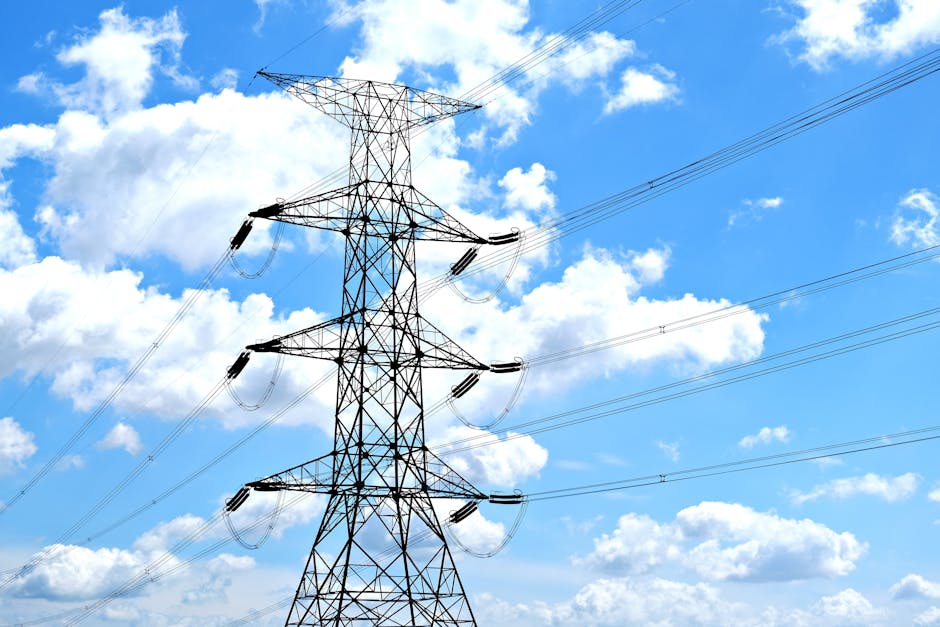
I’ll flag my bias early. I like this theme precisely because it’s boring. Nobody gets excited about a distribution transformer. But the spending behind it isn’t discretionary, it’s not really optional for utilities, and it doesn’t get cancelled the moment a hype cycle cools. That’s a rarer quality in growth investing than it sounds.
The layers of grid modernization stocks
The mistake I see most often is treating this like one trade. It isn’t. There are at least six distinct business models under the same headline, and they don’t move together or carry the same risks. Here’s how I break the sector down before I look at a single ticker.
| Layer | Example names | What drives the growth | My read on the risk |
|---|---|---|---|
| Infrastructure contractors | Quanta Services (PWR), MYR Group (MYRG), EMCOR (EME) | Utility capex budgets and project backlog | Labor-constrained; margins hinge on execution |
| Electrical equipment | Eaton (ETN), Hubbell (HUBB), nVent (NVT), Powell (POWL) | Switchgear, breakers, enclosures for new capacity | Cyclical; valuations already reflect the story |
| Heavy grid technology | GE Vernova (GEV), Siemens Energy, Hitachi Energy | Turbines, HVDC links, high-voltage transformers | Long project cycles; past cost overruns |
| Wire, cable and transformers | Prysmian, Atkore (ATKR), Hammond Power | Copper into the ground; replacement demand | Commodity-priced; brutal when supply catches up |
| Smart meters and grid software | Itron (ITRI), Landis+Gyr, Schneider Electric | Digitization, outage management, demand response | Lumpy utility contracts; slower adoption cycles |
| Utilities deploying capital | NextEra (NEE), Sempra (SRE), Southern (SO) | Rate-base growth on approved investment | Regulator-dependent; rate-sensitive; slower upside |
Tickers, ownership and business mixes change, so confirm current data before you act on any row here. The point isn’t a shopping list. It’s that “I want exposure to the grid” can mean six genuinely different bets, and you should pick which one on purpose rather than by accident.
Why the grid became the bottleneck
For roughly two decades, U.S. electricity demand went basically sideways. Efficiency gains offset population and economic growth, utilities planned around flat load, and grid investment mostly meant maintenance. That era is over, and three separate forces ended it at once.
Demand is climbing again
Data centers are the loudest driver. AI training and inference clusters draw power at a density the grid was never designed for, and a single large campus can request as much capacity as a mid-sized city. On top of that you have electric vehicles, heat pumps replacing gas furnaces, and industrial reshoring pulling manufacturing loads back onto domestic circuits.
Forecasts for how fast demand grows keep getting revised upward, and the numbers move enough that I’d treat any specific figure as directional only, so check current utility and regulator projections. But the direction is not in dispute. Utilities are raising capital spending plans year after year, and total planned grid investment across the decade runs into the hundreds of billions of dollars annually in the U.S. alone. Again, roughly, and it keeps shifting.
Renewables need wires they don’t have
Wind and solar have an inconvenient geography problem. The best wind sits in the central plains, the best solar in the desert Southwest, and the demand sits on the coasts and in the Midwest cities. Connecting them takes new high-voltage transmission, and transmission is the hardest thing in energy to permit and build.
The interconnection queue makes this concrete. There’s a multi-year backlog of generation and storage projects waiting for permission to plug in, and it’s measured in more gigawatts than the entire existing U.S. generating fleet. Those projects don’t produce a watt of revenue until the grid connection exists. That backlog is, in a sense, the demand pipeline for everything in the table above. If you own generation without owning the wires, you own the constrained side of the trade. It’s part of why I look at the grid alongside the best clean energy growth stocks rather than in isolation.
The existing hardware is old
A large share of U.S. transmission and distribution equipment was installed in the middle of the last century and is at or past its design life. Transformers in particular have become a genuine choke point, with lead times for large units stretching to years rather than months, which quietly sets the pace for how fast anything else can get built.
That aging base is a floor under demand. Even if load growth stalled tomorrow, utilities would still be replacing equipment for a decade just to keep reliability where it is. I find that reassuring as an investor, because it means the thesis doesn’t depend entirely on AI capex staying hot.
The companies I actually watch
I’m not going to pretend I have conviction on all of these. But these are the names that come up repeatedly when I look at where grid money lands.
Quanta Services is the giant of the contractor layer. It builds and maintains transmission and distribution lines, does renewable interconnection work, and runs underground utility construction. Its reported backlog has been at or near record levels, which tells you demand is real. What I watch is whether it can staff the work. Skilled linemen are scarce, and Quanta’s training pipeline is arguably its real moat. Check current backlog and margin figures before drawing conclusions.
Eaton and Hubbell sit on the equipment side, selling switchgear, breakers, transformers and the unglamorous connective hardware every project consumes. Both have benefited from the data-center surge, and both trade at multiples that already assume that surge continues. That’s my main hesitation, not the businesses themselves.
GE Vernova came out of the GE breakup in 2024 as a pure-play energy company spanning gas turbines, wind, and an electrification segment that includes grid equipment and software. It’s the most direct large-cap way to own both generation and the wires, though the wind business has been the messy part of the story.
Powell Industries and nVent are smaller, more concentrated plays on electrical infrastructure hardware. More torque, more volatility, and in Powell’s case a business that historically leaned on oil and gas before the data-center and utility mix shifted. Smaller names like these move hard in both directions.
Itron represents the digital layer: smart meters, communications networks, and the software utilities use to see what’s actually happening on their own distribution systems. It’s a slower-burn story tied to utility procurement cycles, which are famously unhurried.
How I evaluate grid modernization stocks
A great theme and a great investment aren’t the same thing, and grid names have already been discovered by the market. Here’s the checklist I run before I take one seriously.
- Is the backlog real and profitable? A record backlog booked at bad prices is a liability, not an asset. I want to see margin trends alongside the headline number.
- Who bears the cost risk? Fixed-price contracts on multi-year projects have destroyed margins across this industry before. Cost-plus and unit-price work is far safer.
- How much is data-center demand? If a company’s growth leans hard on hyperscaler capex, you’ve partly bought an AI cycle bet, whether you meant to or not.
- Is there a labor or supply constraint? Transformer lead times and lineman shortages cap how fast revenue can grow no matter how big the order book gets.
- What am I paying? Several of these names re-rated sharply once the AI-power narrative caught on. Buying a good business at a perfect-execution price is how you lose money on a correct thesis.
That last point deserves emphasis. I’ve watched investors get the story exactly right and still do poorly because they arrived after the multiple expanded. Being early to a theme matters more here than being right about it.
The risks I take seriously
Regulatory lag is the big one. Utilities can only recover investment through rates their regulators approve, and approvals move slowly and politically. Consumer bills are already a live issue in several states, and pushback on rate increases can slow the whole spending cycle.
Then there’s the AI question. If hyperscaler capex plans get trimmed, the most aggressively priced grid names would deflate fast, even though the replacement-cycle demand underneath would remain. Interest rates matter too, since utilities and project developers borrow heavily and higher financing costs squeeze what gets built. And copper and steel prices flow straight into the cable and equipment layer, which can compress margins with no warning.
Where the grid connects to other themes
The grid is downstream of nearly everything else in energy, which is what makes it such a useful lens. Every EV that gets sold is a load the distribution system has to absorb, so the buildout is tightly coupled to the ev supply chain and the charging infrastructure behind it.
On the supply side, the search for firm, always-on power has pulled nuclear energy back into the conversation, including restarts and small modular reactor projects aimed at data-center customers. Those plants still need transmission to reach load, which loops right back to the wires. If you approach the sector through an environmental or governance lens, grid infrastructure also sits comfortably inside a sustainable investing framework, since none of the decarbonization targets happen without it.
That said, I’d never build a portfolio around a single theme, however durable. Grid names are one slice for me, sized so a bad two years hurts without doing damage. The broader foundation I start from is my list of the best growth stocks to buy in 2026, and theme bets like this one get layered on top of that, not in place of it.
Frequently asked questions
What exactly counts as a grid modernization stock?
Any company earning meaningful revenue from upgrading or expanding the electrical network. That spans construction contractors, makers of transformers and switchgear, wire and cable producers, smart-meter and grid-software firms, and the utilities funding the work. The label is loose, so always check what share of a company’s revenue actually comes from grid work.
Are grid stocks just an AI data center trade?
Partly, and that’s the honest risk. Data-center demand accelerated the story and drove much of the recent re-rating. But aging equipment, renewable interconnection and vehicle electrification would still require heavy grid spending without a single new AI campus. The base demand is real; the recent enthusiasm premium is what’s tied to AI.
Do utilities or suppliers make the better investment?
They serve different goals. Utilities offer regulated, slower growth with dividends and rate-base compounding, but returns are capped by regulators. Suppliers and contractors have more upside and more volatility, since they ride the spending cycle directly. I tend to favor suppliers for growth exposure and treat utilities as the defensive end of the theme.
What’s the biggest constraint on grid modernization?
Permitting and physical supply, not money. New transmission lines can take a decade to approve across multiple jurisdictions, and large transformers have had lead times measured in years. Skilled electrical labor is scarce too. Those bottlenecks limit how quickly revenue converts from backlog, which is exactly why contractor execution matters so much.
Is it too late to buy grid modernization stocks?
Several names have already re-rated significantly, so the easy repricing is likely behind us. The buildout itself, though, runs for decades rather than quarters. I’d focus on valuation and entry price rather than the theme’s validity, and consider scaling in over time instead of committing all at once. Check current valuations first.
The Bottom Line
The grid is the constraint on nearly every energy story people are excited about right now, and that’s what makes it worth owning a piece of. Demand is rising for the first time in a generation, the existing hardware is old, and renewables can’t reach customers without new wires. My approach is to spread exposure across the layers rather than betting on one contractor, favor companies with disciplined contract terms and visible margins over pure backlog headlines, stay honest about how much of the growth is really an AI capex bet, and refuse to pay a perfect-execution price for a business that still has to hire linemen and wait on transformers. Get the entry price right and this is one of the more durable growth themes available. Overpay for it and you’ll be right about the world and wrong about the stock.
Last updated: August 2026. Figures are approximate and change — confirm current data before investing. Educational only, not individual investment advice.