On this page
The first electric bus I ever rode was in Seattle, and what struck me wasn’t the acceleration. It was the silence. Three stops later I had a less romantic thought: who actually makes money on this thing?
Electric bus stocks are shares in the companies that build, power, or charge zero-emission buses for transit agencies, school districts, and commercial fleets. Demand is driven by government budgets rather than consumer taste, which makes revenue lumpy but unusually visible. I treat the group as a small, high-risk satellite position, never a core holding.
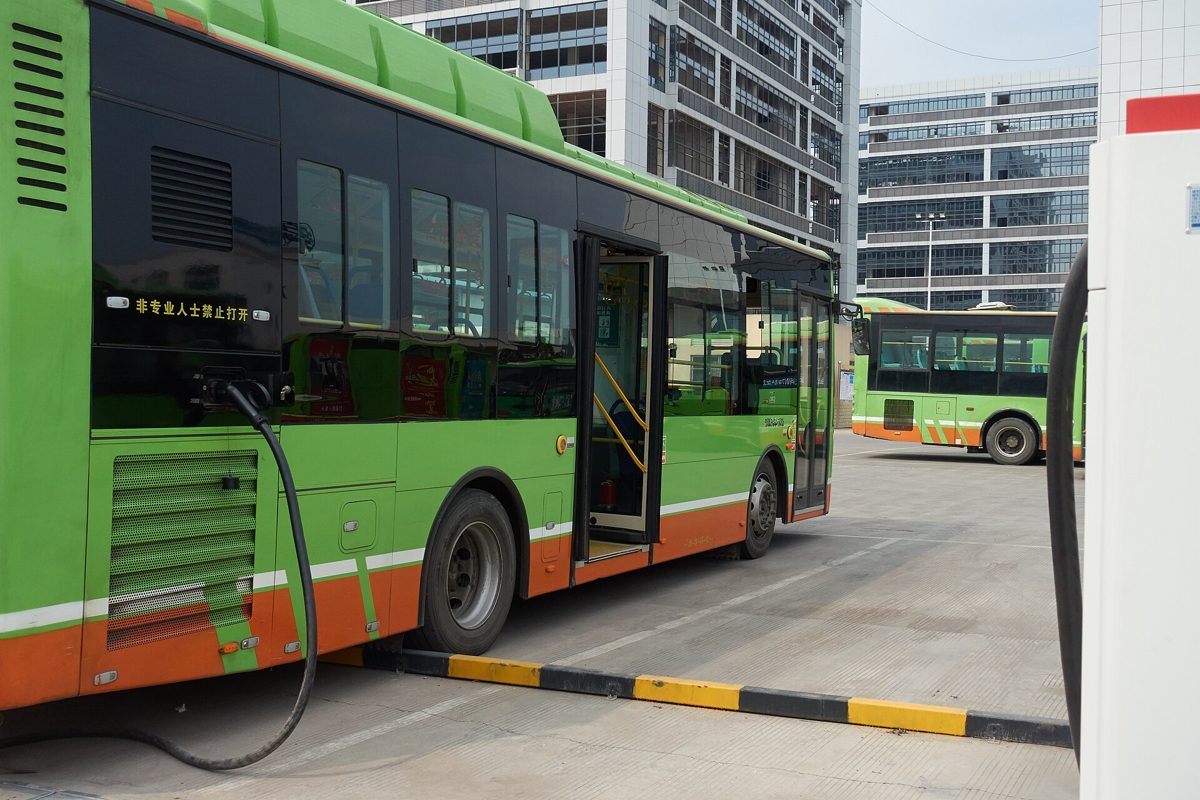
That distinction matters more than anything else I can tell you about the sector. Passenger EV makers live or die on brand, showroom traffic, and how a 34-year-old feels about a touchscreen. Bus makers live or die on procurement committees, grant cycles, and whether a city council can get a capital budget through. Those are completely different games, and the second one has broken a lot of investors who assumed it was the first one in a bigger vehicle.
How the main electric bus stocks compare
Here’s the shortlist I keep on a watchlist. I’m not recommending any of them — this is a map of who does what, so you know what you’d actually be buying.
| Company (ticker) | What it actually sells | Why I watch it | The risk I’d flag first |
|---|---|---|---|
| BYD (BYDDY, OTC ADR) | Full electric bus lineup plus its own batteries and motors | The volume leader globally by a wide margin; vertical integration gives it real cost control | China exposure, ADR structure, and tariff/procurement bans in some Western markets |
| Blue Bird (BLBD) | School buses — diesel, propane, gasoline, and electric | The legacy diesel business funds the electric transition, so it isn’t a cash-burning startup | Electric is still a minority of units; grant timing swings the mix quarter to quarter |
| NFI Group (NFI.TO, NFYEF) | New Flyer transit buses in North America, Alexander Dennis in the UK | Deep incumbent relationships with big-city transit agencies | Carries meaningful debt and has wrestled with margins and supply chain hangovers |
| Cummins (CMI) | Diesel engines today; Accelera segment sells electric drivetrains and electrolyzers | Profitable core business subsidizes the zero-emission bet | Electrification is a rounding error on revenue — you’re mostly buying a diesel company |
| Ballard Power (BLDP) | Hydrogen fuel cell modules, with buses as a lead application | Fuel cells still make sense for long routes and cold climates | Persistent cash burn and a hydrogen timeline that keeps sliding right |
| Eaton (ETN), Quanta Services (PWR) | Electrical gear and the contractors who install depot charging | They get paid whichever bus brand wins the contract | Bus electrification is a small slice of a much larger business |
Notice how few pure plays there are. That’s not an accident, and I’ll come back to why.
Why procurement-driven demand changes the math
A transit agency doesn’t impulse-buy. It runs a multi-year capital plan, applies for federal and state funding, issues an RFP, evaluates bids, and then takes delivery eighteen months later. The upside is that when an order lands, you can see revenue coming from a long way off. Backlog is a real number here, not a vibe.
The downside is brutal in the other direction. If a funding round slips a quarter, a manufacturer’s revenue slips with it — and manufacturers with fixed factory costs and no diesel business to fall back on start bleeding immediately.
I’ve learned to read the funding environment as the primary fundamental for this group. In the U.S., the EPA’s Clean School Bus Program and Federal Transit Administration grant programs have been the biggest single driver of orders. Program sizes and disbursement schedules shift with each administration and each appropriations fight, so check current program status before you assume a tailwind is still blowing.
What actually shows up in the numbers
Three things I look for, in order:
- Backlog and book-to-bill. Orders in hand beat management enthusiasm every time. A book-to-bill above 1 means the pipeline is filling faster than it’s emptying.
- Gross margin per unit, not just revenue growth. Several bus makers grew revenue impressively while losing money on every bus they shipped. Growth that costs you cash isn’t growth.
- Months of cash on hand. For anything that isn’t already profitable, I want to know how many quarters it can survive without raising capital. If the answer is under six, I pass.
Management commentary is close to worthless here. Every bus CEO will tell you the pipeline is strong. Backlog conversion — how much of last year’s stated backlog actually turned into delivered units — tells you whether that was true. Compare the two across a few years and the credible operators separate themselves quickly.
The three segments are not one market
Transit buses
This is the biggest and most mature slice. Fixed routes, predictable daily mileage, overnight depot charging — the operating profile fits battery-electric almost perfectly. Buses run 12 to 15 years and rack up enormous mileage, so fuel and maintenance savings compound in a way they never do on a family car.
Cities across the U.S., Europe, and China have set zero-emission fleet deadlines. Latin America — Santiago and Bogotá especially — has moved faster than most Americans realize, largely with Chinese-built buses.
The catch is that transit contracts are competitively bid and margins are thin. Winning a headline order from a major metro looks great in a press release and can still be barely profitable once you account for the customization every agency demands. I’ve stopped getting excited about order announcements that don’t come with margin commentary attached.
School buses
My favorite segment on paper, and the one I’d watch most closely. The U.S. school bus fleet is enormous — figures in the range of 450,000 to 500,000 vehicles get quoted, so treat any exact number with suspicion and check current data. Electrification has barely started.
School buses also have a quirk I find genuinely interesting: they sit idle from mid-morning through mid-afternoon and all summer. That makes them candidates for vehicle-to-grid arrangements, where a parked bus sells stored power back during peak demand. It’s still early and the economics vary wildly by utility territory, but it’s a real second revenue line rather than a pitch-deck fantasy. It also ties this sector directly to grid modernization, since none of it works without utilities willing and able to handle two-way flow.
Shuttle and commercial fleets
Airports, hotels, campuses, corporate shuttles. Short routes, constant stop-and-go, low speeds — the conditions where electric drivetrains beat diesel by the widest margin. Smaller ticket sizes, but the buying decisions move faster because no city council is involved. GreenPower Motor (GP) plays in this space, though it’s a microcap and should be treated as such.
The graveyard nobody puts in the pitch deck
I want to be blunt, because this is the part that gets skipped.
Proterra was, for a while, the U.S. electric bus story. It went public via SPAC, was celebrated at the White House, and filed for Chapter 11 in 2023. Its assets were carved up and sold. Lion Electric, the Quebec-based electric bus and truck maker, sought creditor protection in Canada in late 2024. Nikola, a related commercial EV name, filed for bankruptcy in early 2025.
None of those companies failed because demand didn’t exist. They failed because building buses is capital-hungry, low-margin manufacturing, and they ran out of money before scale arrived. That’s the actual risk in this sector — not that electrification stalls, but that the specific company you own doesn’t survive long enough to benefit from it.
Which is why the surviving names I take seriously all have something else paying the bills. Blue Bird sells a lot of diesel buses. NFI has decades of transit contracts. Cummins has an engine empire. The pure-play startups are the ones that keep dying.
Three ways I’d get exposure
- Diversified manufacturers. Blue Bird, NFI, Cummins. You get less upside per bus sold but a real business underneath. This is where I’d start.
- Picks and shovels. Charging hardware, power electronics, and the electrical contractors who wire the depots. Every electrified depot needs substantial upstream work regardless of whose badge is on the bus. This overlaps heavily with the broader ev supply chain, where battery, cathode, and power-module suppliers sell into buses, trucks, and cars alike.
- Basket exposure through a broader fund or sleeve. If you can’t pick, don’t. Owning the theme through a diversified clean-transport holding removes the single-company bankruptcy risk that has flattened this space repeatedly.
I’d sit any of these inside a wider clean-energy allocation rather than on its own. If you’re building that allocation from scratch, my write-up on the best clean energy growth stocks is a more sensible starting point than going straight to bus makers, and the framework I use for sustainable investing covers how I weigh impact against the plain question of whether a business can fund itself.
Risks I don’t wave away
Upfront cost. An electric bus still costs materially more than a diesel equivalent — commonly cited premiums run well into six figures per unit, and they move with battery prices, so check current figures. Remove the subsidy and a lot of orders quietly disappear.
Charging infrastructure. Electrifying a depot can cost as much as the buses themselves once you account for transformers, switchgear, and utility interconnection. Utility upgrade queues in some regions run years long.
Policy whiplash. This sector’s revenue is downstream of legislation. Mandates get delayed, grant programs get trimmed, and procurement rules around Chinese-built buses keep changing.
Competition from a giant. BYD’s cost position is hard to argue with. Western manufacturers are partly protected by procurement rules rather than by being cheaper, and protection can be withdrawn.
Dilution. Unprofitable manufacturers raise capital. Repeatedly. Read the share count history before you read the revenue growth.
Frequently asked questions
Are electric bus stocks a good investment right now?
They’re a speculative slice of a portfolio, not a foundation. The demand case is solid and policy-supported, but the sector has a genuine record of bankruptcies. If you want exposure, I’d favor manufacturers with profitable legacy businesses and keep the position small enough that a total loss wouldn’t hurt.
What is the largest electric bus manufacturer?
BYD, by a wide margin globally. It has delivered electric buses in the tens of thousands worldwide across dozens of countries, and it builds its own batteries and motors, which is the source of its cost advantage. Exact delivery totals move constantly, so check current company disclosures rather than trusting a stale figure.
Can I buy BYD stock in the United States?
U.S. investors typically access it through the BYDDY ADR or BYDDF on over-the-counter markets rather than a major exchange listing. That means wider spreads, thinner volume, and less disclosure than you’d get from a NYSE-listed name. Confirm what your broker actually supports before assuming you can buy it.
Are electric school buses cheaper to operate than diesel?
Generally yes on fuel and maintenance, since electric drivetrains have far fewer moving parts and no oil changes or exhaust systems. The catch is the purchase price and the depot charging build-out. Whether total cost of ownership works usually depends on grant funding and local electricity rates — run the numbers for your specific district.
What happened to Proterra?
Proterra went public through a SPAC merger, struggled to reach profitable scale in bus manufacturing, and filed for Chapter 11 bankruptcy in 2023. Its battery and charging assets were sold off to other companies. It’s the clearest case study in why demand growth alone doesn’t make a manufacturer investable.
The Bottom Line
I believe bus fleets electrify. I’m far less confident about which company captures the profit, and the last several years suggest I’m right to be cautious. The economics genuinely favor electric on a 12-year vehicle life, and the policy support is real even when it wobbles.
My take: own this theme through diversified manufacturers or infrastructure suppliers, size it small, and watch backlog and cash runway more closely than you watch revenue growth. If you want the same growth exposure with fewer bankruptcy trapdoors, my list of the best growth stocks to buy in 2026 covers names with sturdier balance sheets.
Last updated: August 2026. Figures are approximate and change — confirm current data before investing. Educational only, not individual investment advice.