On this page
- A quick comparison of the main energy storage stocks
- Why storage demand got steeper than I expected
- The technology map, and why it matters for stock picking
- How I actually think about the individual names
- What actually goes wrong with energy storage stocks
- How I’d size the exposure
- Frequently asked questions
- The Bottom Line
I came to battery storage the lazy way. I owned a solar name that got crushed in 2022, and only afterward went looking for the part of the clean-energy stack that was actually earning a margin.
Energy storage stocks are shares in companies that build, supply, or operate battery systems that hold electricity and release it when the grid needs it. The group spans hardware makers like Tesla and Fluence, long-duration startups, and the electrical-equipment suppliers that quietly sell into every project.
That last group is the one most investors skip. It’s also where I’ve had the least heartburn.
A quick comparison of the main energy storage stocks
Here’s the shortlist I keep. It isn’t a buy list — it’s a map of who does what, because “energy storage” gets used to describe businesses with almost nothing in common.
| Company (ticker) | What it actually sells | Why I watch it | The main risk |
|---|---|---|---|
| Tesla (TSLA) | Megapack utility systems and Powerwall home batteries | Largest Western deployer; storage margins have run ahead of the auto segment | Storage is still a minority of revenue, so the stock trades on cars and robotaxis |
| Fluence Energy (FLNC) | Integrated grid-scale storage systems plus bidding software | Closest thing to a pure play on utility storage demand | Thin integrator margins; buys cells rather than making them |
| Eos Energy (EOSE) | Zinc-based long-duration battery systems | Non-lithium chemistry with a domestic supply chain angle | Early-stage, cash-hungry, heavy dilution risk |
| Stem Inc (STEM) | Storage software and asset optimization | Asset-light model layered on other people’s hardware | Has struggled to prove the software actually scales profitably |
| GE Vernova (GEV) | Grid equipment, turbines, and electrification hardware | Sells into storage projects without betting on any one chemistry | Diversified, so storage growth gets diluted by slower segments |
| NextEra Energy (NEE) | Utility plus one of the biggest renewables-and-storage developers | Owns the assets and the cash flows they throw off | Rate-sensitive, utility-style growth rather than a rocket |
| Enphase (ENPH) | Microinverters and residential battery systems | Direct read on the home storage cycle | Brutally exposed to consumer financing and policy changes |
Figures and positioning shift fast in this sector — check current filings before you act on any of it.
Why storage demand got steeper than I expected
The textbook argument is simple. Solar produces at midday, wind energy produces whenever the wind blows, and neither of them cares what time you want to run your dryer. Storage moves electrons across hours so intermittent generation can behave like firm capacity.
Fine. But that argument has been around for fifteen years and storage stocks still went nowhere for most of them. What changed is the second demand source: load growth.
Data centers have turned electricity from a slow-growth commodity into something utilities are scrambling to secure. Interconnection queues in several U.S. regions are backed up for years. A developer who can put a battery on an existing interconnection and shave peak demand gets paid — not because it’s green, but because it’s the fastest megawatt available. That’s a very different buyer than the climate-motivated one.
There’s a third leg too. Market rules have slowly caught up. Storage assets in several U.S. wholesale markets can now earn from multiple services at once: energy arbitrage, frequency regulation, and capacity payments. Stacking those revenue streams is what took project returns from marginal to bankable. If you want a plain-English version of the shift: storage stopped being a science project and became a financing product.
The technology map, and why it matters for stock picking
Lithium iron phosphate runs the show
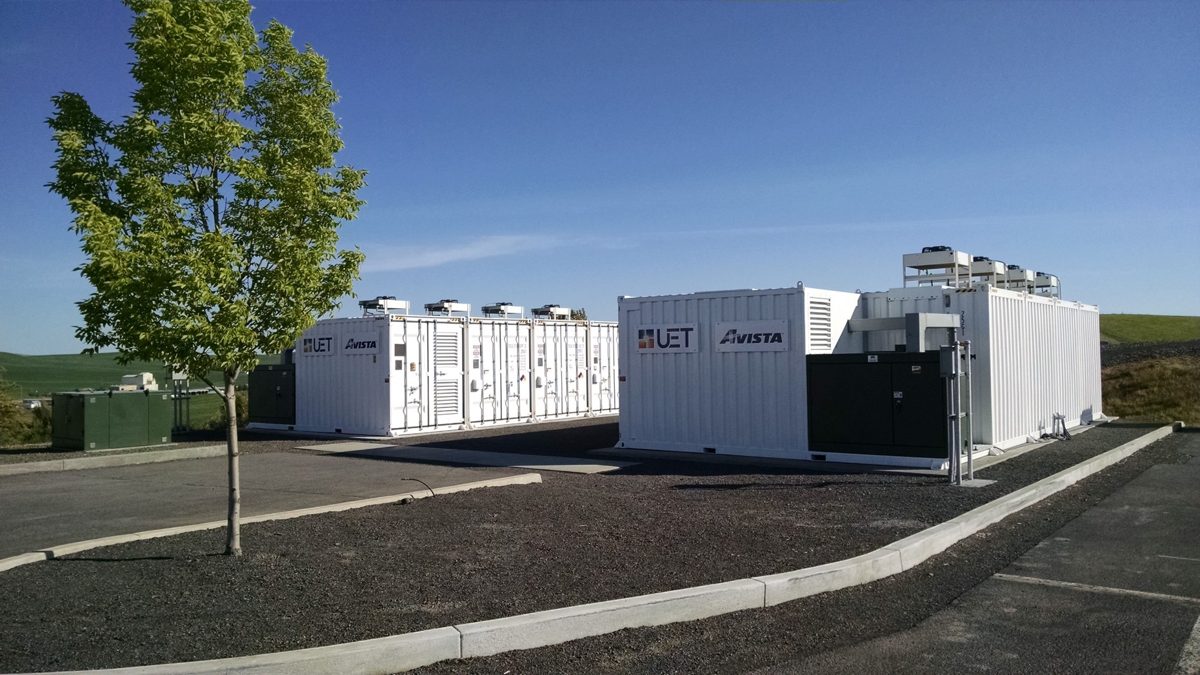
Almost every grid battery going into the ground today is lithium-ion, and increasingly the LFP variant — lithium iron phosphate. It’s less energy-dense than the nickel chemistries carmakers prefer, which matters enormously in a vehicle and barely at all in a shipping container sitting in a field. What LFP gives up in density it returns in cycle life, thermal safety, and cost.
The important investing consequence: stationary storage rides the EV industry’s manufacturing scale. Every gigafactory built for cars pushes cell costs down for grid projects too. That’s a real tailwind. It’s also why cell-level differentiation is hard to sustain — the cells are becoming a commodity, and commodities compress margins.
So ask a blunt question about any storage company: are you selling the commodity, or the thing wrapped around it? Integration, software, safety engineering, service contracts, and interconnection expertise are stickier than cells.
Long-duration storage is the interesting lottery ticket
Lithium systems are typically sized for two to four hours of discharge. As renewable penetration climbs, grids need something that can cover eight, twelve, or a hundred hours — the multi-day lull, not the evening ramp.
Iron-air, flow batteries, compressed air, thermal, and gravity systems are all chasing that gap. Form Energy is the most-discussed name here and is still private. Eos and ESS Tech are the listed ways to play it. My honest read: the addressable market is enormous and the odds any specific company captures it are low. I treat long-duration names as small speculative sleeves, not core positions, and I size them like I expect to be wrong.
It’s worth holding this alongside the other decarbonization routes. Nuclear energy solves the same firm-power problem with a completely different cost curve and timeline, and carbon capture attacks emissions without touching intermittency at all. Storage doesn’t have to beat them — but if nuclear buildouts accelerate, some of the long-duration thesis gets eaten.
How I actually think about the individual names
Tesla is the least pure and possibly the best
Tesla’s energy division deploys more grid storage than any other Western company, and the margin profile on that segment has been better than the automotive side. Megapack demand has consistently outrun what the company could build, which is a nice problem.
The catch is obvious. Storage is still a minority of Tesla’s revenue, so you don’t get a clean read on the thesis — you get a bundle that includes vehicle price wars, autonomy promises, and one very loud CEO. If you buy TSLA for the batteries, be honest that you’re also buying everything else.
Fluence is the pure play, with pure-play problems
Fluence sells integrated grid-scale systems and the trading software that runs them. It’s the cleanest listed exposure to utility storage demand in the U.S. It also buys its cells from others, which means it sits in the squeezed middle: commodity input costs on one side, competitive bids on the other. The company has had lumpy quarters and inconsistent execution. I’d want to see several periods of stable gross margin before treating it as anything other than volatile.
Owners and homeowners: two very different bets
NextEra sits at the other end of the risk spectrum. It develops and owns renewables-plus-storage projects and collects contracted revenue from them for decades. You’re buying cash flows, not a technology bet, and the stock behaves like the utility it partly is — sensitive to interest rates, slow to double, unlikely to halve on one bad quarter.
Residential storage is a separate animal entirely. Enphase and Sunrun sell into a market driven by retail power prices, net metering rules, and whether a homeowner can get financing at a tolerable rate. Those inputs moved sharply against the sector when rates rose and California reworked its rooftop-solar rules. I’d never assume a strong utility-scale quarter says anything useful about the home market. They’ve repeatedly moved in opposite directions.
The picks-and-shovels tier is where I’ve slept best
Every battery project needs transformers, switchgear, inverters, and skilled electrical contractors. Those suppliers — GE Vernova, Eaton, Powell Industries, Quanta Services, Nextracker on the solar-adjacent side — don’t care which chemistry wins. They get paid on the buildout regardless. The trade-off is that you give up the vertical move you’d get from a correct bet on one technology. I’ve made peace with that.
If you’d rather hold the theme as a basket than pick winners, I’ve laid out how I’d assemble one in my guide to the best clean energy growth stocks.
What actually goes wrong with energy storage stocks
This is the section I wish someone had written for me in 2021.
- Growth without profit. Deployment gigawatt-hours can compound beautifully while gross margin stays near zero. Volume is not a business model. Check whether unit economics improve with scale or just get bigger.
- Chinese competition. CATL, BYD, and Sungrow have scale and cost advantages that Western integrators struggle to match. Tariffs and content rules soften this, but tariffs are policy, and policy moves.
- Policy dependence. Investment tax credits and domestic-content bonuses swing project returns hard. When Washington changes its mind, these stocks re-rate in a week.
- Financing cost. Storage projects are capital-intensive and long-lived. Higher rates hurt them roughly the way they hurt real estate — quietly, then all at once.
- Dilution. Pre-profit storage companies fund themselves by selling shares. Read the share count history, not just the revenue chart.
How I’d size the exposure
I hold storage as a satellite, not a foundation. For me that means a modest slice split between one diversified electrical-equipment name and one or two higher-beta pure plays, with anything pre-revenue kept small enough that a total loss is annoying rather than damaging.
Dollar-cost averaging suits this sector better than most. The stocks move on policy headlines and quarterly deployment numbers, both of which are noisy. Buying in tranches over a year has saved me from my own conviction more than once. If storage is one theme in a broader portfolio, it slots naturally next to the ideas in my list of the best growth stocks to buy in 2026.
Frequently asked questions
Are energy storage stocks a good investment right now?
They’re a legitimate growth theme with genuinely volatile stocks. Demand drivers are real — renewables buildout, data center load, market rules that finally pay batteries properly. But many listed names still don’t earn consistent profits. I’d call it a speculative sleeve for most portfolios rather than a core holding.
What’s the difference between grid-scale and residential storage?
Grid-scale systems are utility-sized installations sold to developers and power companies, driven by project economics and interconnection queues. Residential batteries sell to homeowners and depend on retail electricity rates, net metering rules, and consumer financing. They’re different customers, different sales cycles, and different risks — don’t treat one as a proxy for the other.
Will lithium-ion stay dominant in energy storage?
For short-duration storage, probably yes for a long while — the manufacturing scale advantage is enormous and still growing. The genuine opening is multi-day duration, where lithium’s cost per kilowatt-hour of capacity gets awkward. That’s the gap iron-air and flow chemistries are chasing, and it’s far from settled.
Can I get storage exposure without picking individual stocks?
Yes. Several clean-energy and battery-technology ETFs hold storage names alongside solar, wind, and materials companies. You’ll get diluted exposure and pay a fee, but you avoid single-company blowups. Read the holdings before you buy — some “battery” funds are mostly mining companies, which is a different bet entirely.
How does data center growth affect storage demand?
It adds a buyer who cares about speed and reliability rather than emissions. Batteries can be deployed faster than new generation or transmission, so they’re being used to relieve constrained grids and firm up power for large loads. That demand is less policy-dependent than the renewables-driven kind, which I consider a plus.
The Bottom Line
Storage is the clean-energy segment where I’ve seen the clearest path from an engineering story to actual cash flow — and also the one where the gap between deployment growth and shareholder returns has been widest. My take: own the buildout through diversified suppliers, add a pure play if you can stomach the swings, keep long-duration bets small, and judge every name on margin trend rather than gigawatt-hours shipped.
Last updated: August 2026. Figures are approximate and change — confirm current data before investing. Educational only, not individual investment advice.